Filipinos make up the third-largest Asian community in Louisville, Kentucky, with a vibrant, dispersed population notably represented in the local medical and professional sectors. The community stays highly connected through cultural celebrations, community organizations, and expanding local businesses.
-Wave 3 News (link)
FILIPINOS IN THE 20th CENTURY

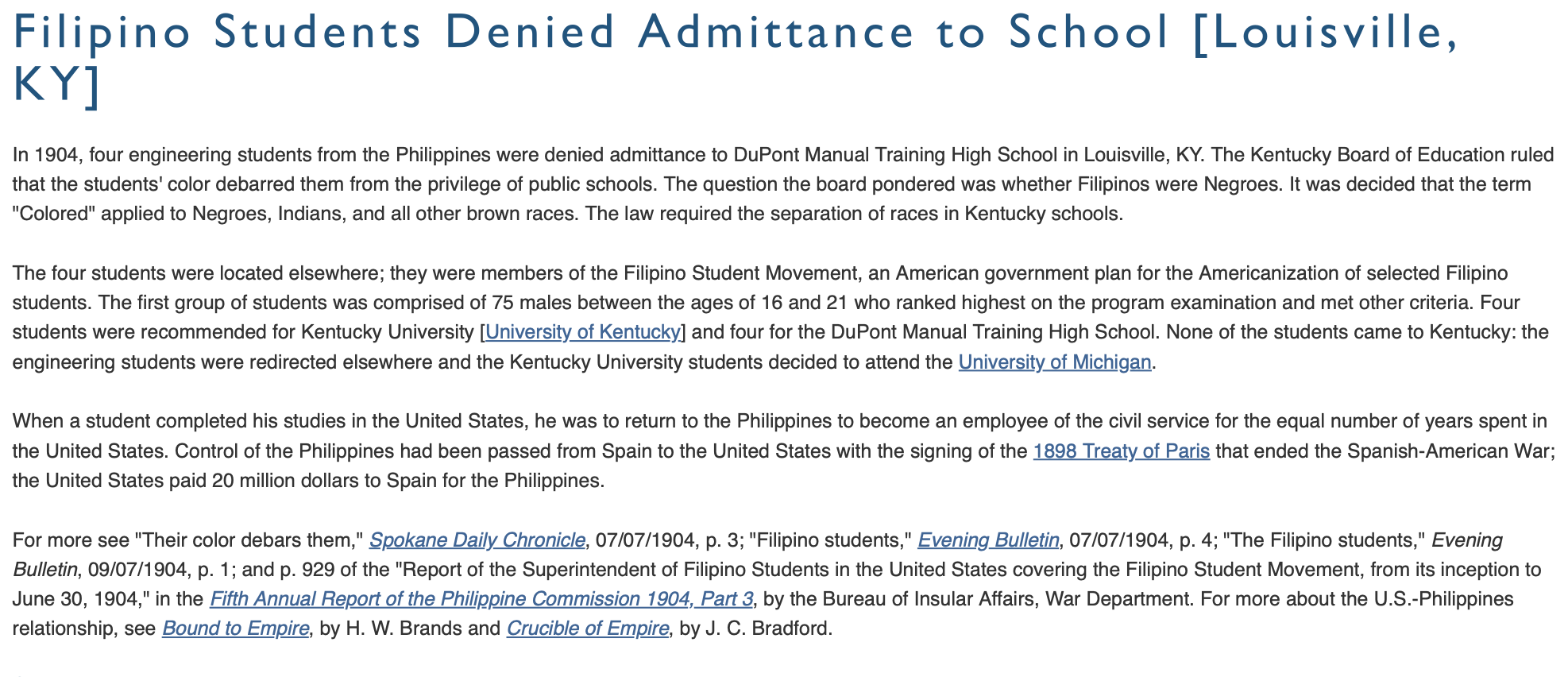
In 1904, four engineering students from the Philippines were part of the Filipino Student Movement (an American government plan for the Americanization of selected Filipino students) . Although they applied to DuPont Manual Training High School in Louisville, KY, they were denied admittance. The Kentucky Board of Education ruled that the students' skin color debarred them from the privilege of attending public schools. At the time, Kentucky schools lawfully required the separation of races in their classrooms.The issue in question was whether Filipinos would be considered “Negroes.” It was decided that the term "Colored" applied to Negroes, Indians, and all other brown races, including Filipinos.
BUILDING COMMUNITY
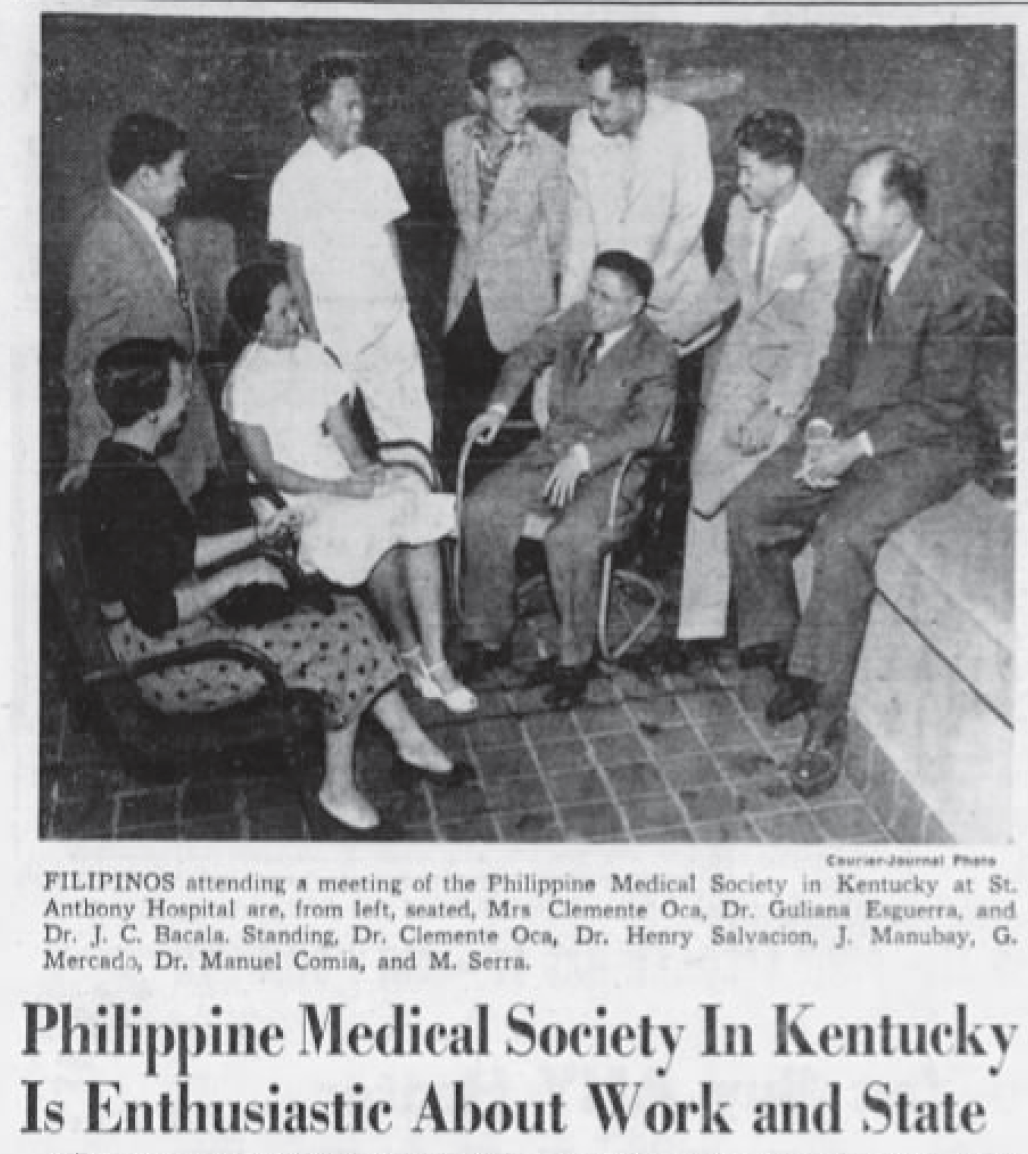
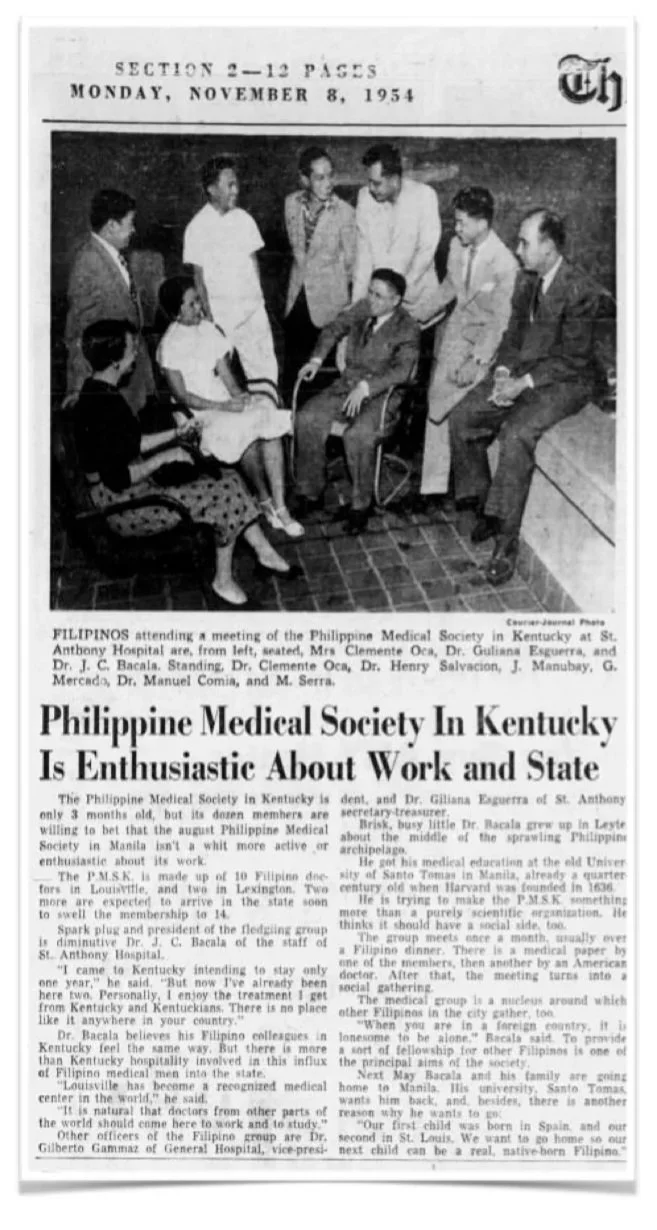
50 years after the students were disbarred, Filipinos were in the height of immigrating to Louisville and surrounding areas. In a 1954 Louisville newspaper interview, influential Filipino Dr. Jesus Bacala (pictured center in above left photo) said,
I intended to stay in Kentucky for only one year, but now I’ve been here two. Personally, I enjoy the treatment I get from Kentucky and Kentuckians. There is no place like it anywhere in your country.
Around this time, many Filipino immigrants moved to Louisville, Kentucky if they were:
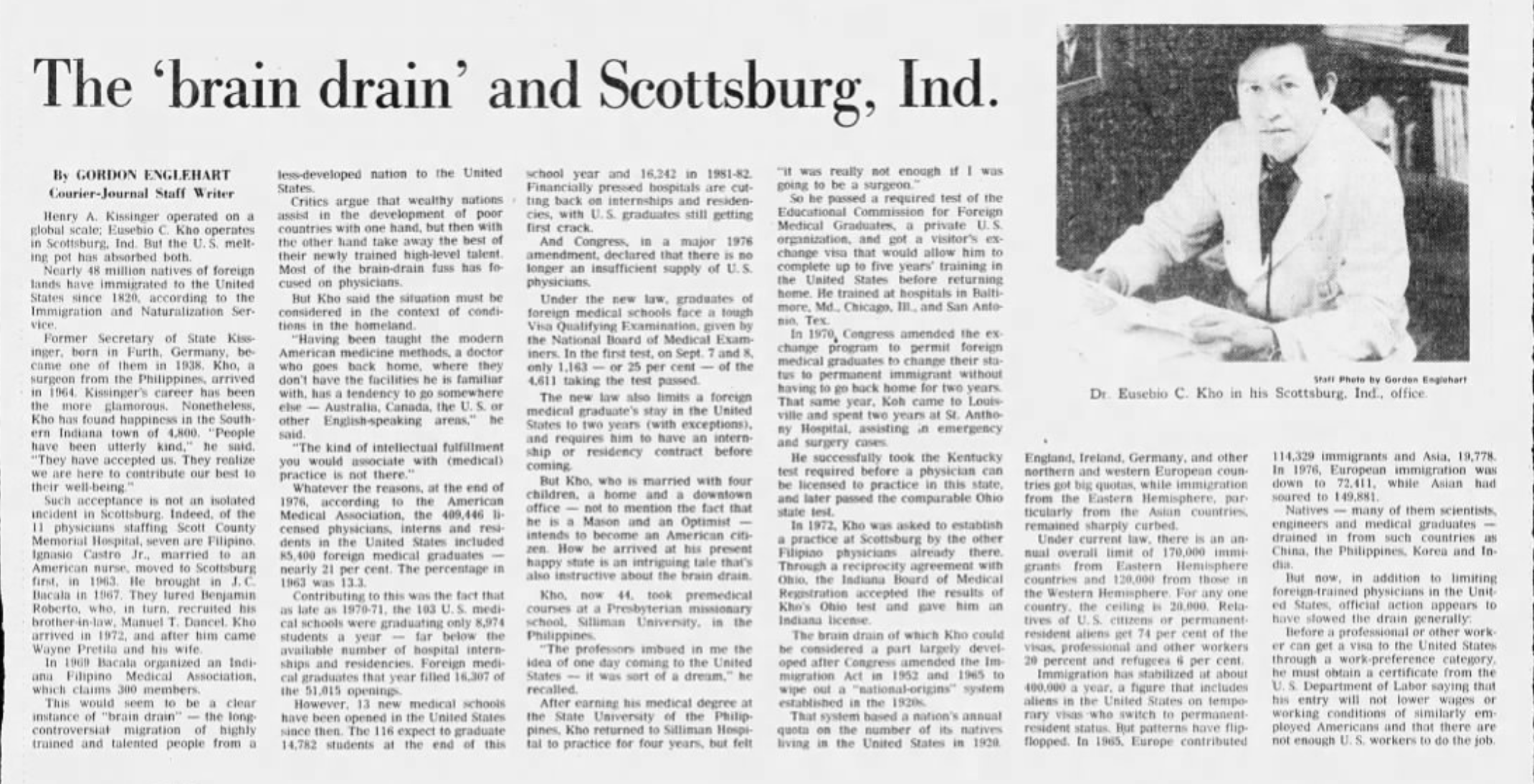
● Medical professionals beginning their residencies at one of the many hospitals or opening their own private practice.
● In the military serving the United States and residing on military base Fort Knox (40 miles from Louisville).
● A Filipino professional benefiting from the 1965 Immigration and Nationality Act/Hart Cellar Act which abolished an earlier quota system based on national origin. This law established a new immigration policy based on reuniting immigrant families and attracting skilled professionals to the United States.
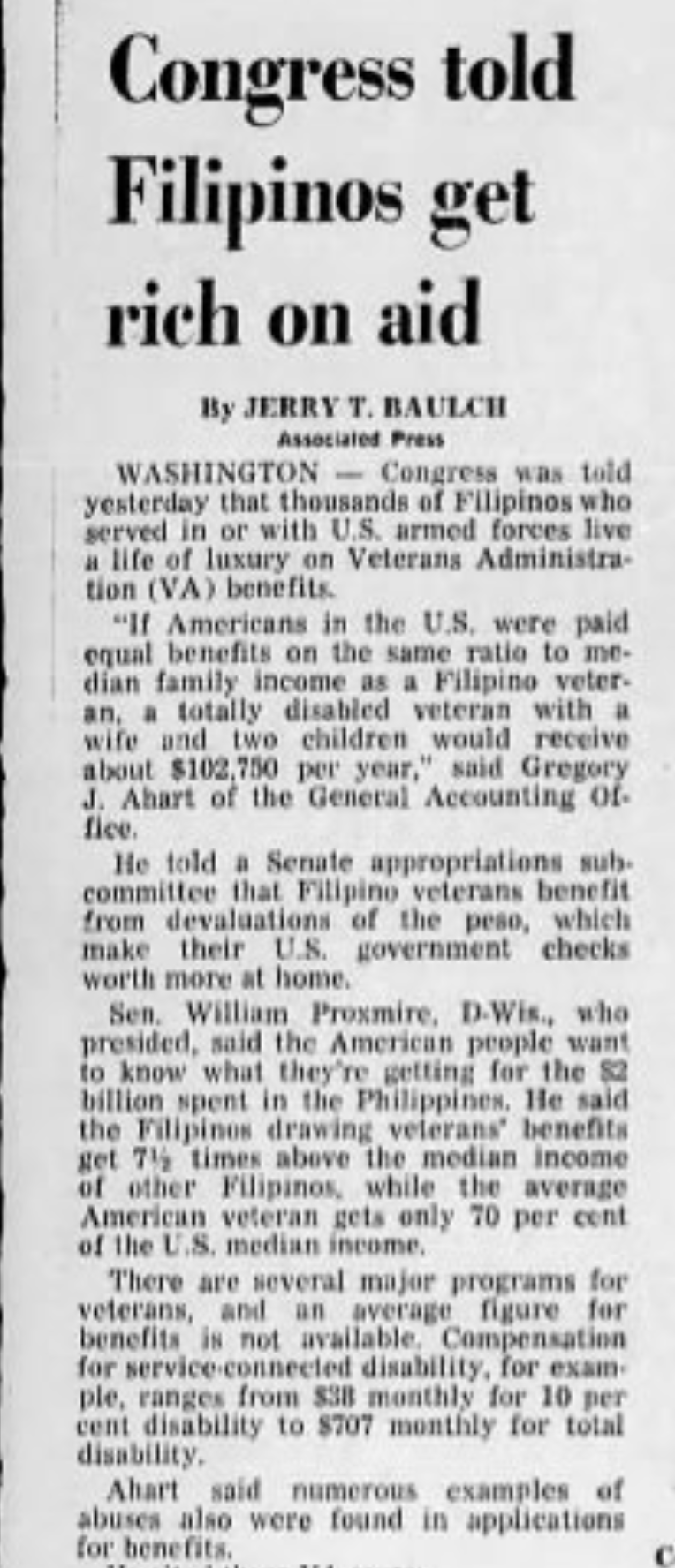
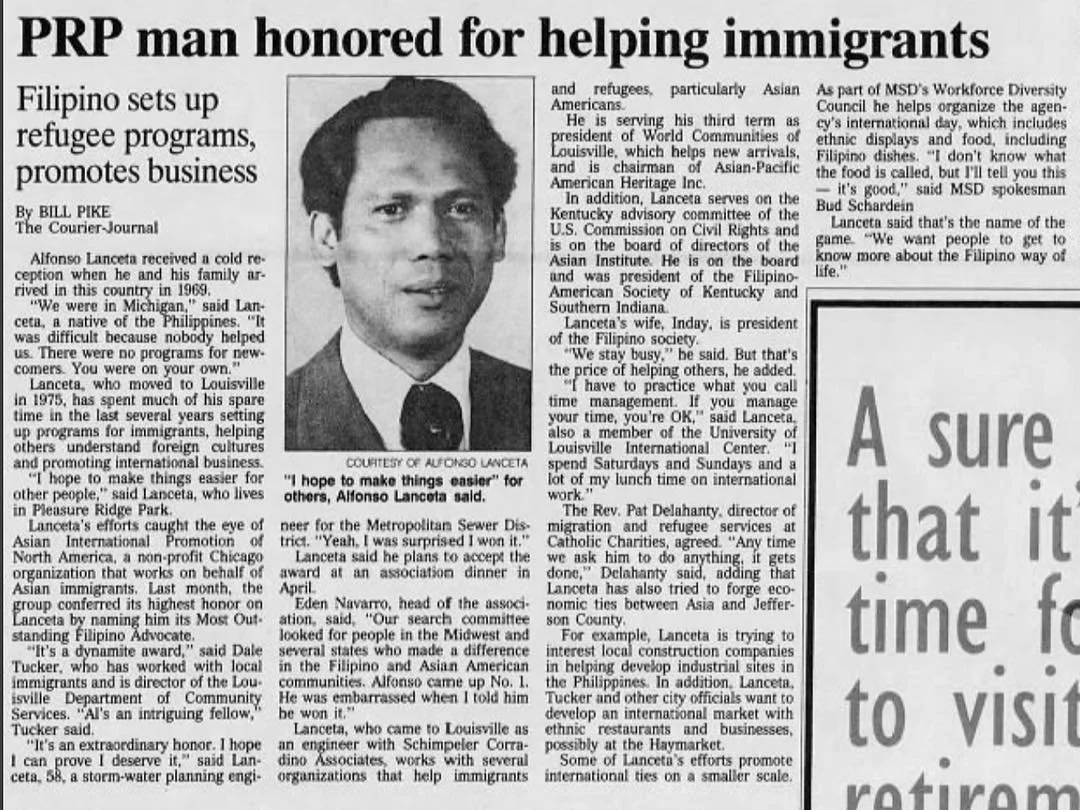
Throughout the 70s, 80s, and 90s, Filipinos continued to immigrate and petition family members to join them in the US. This growth created government, military, economic, and educational ties between the US and the Philippines.
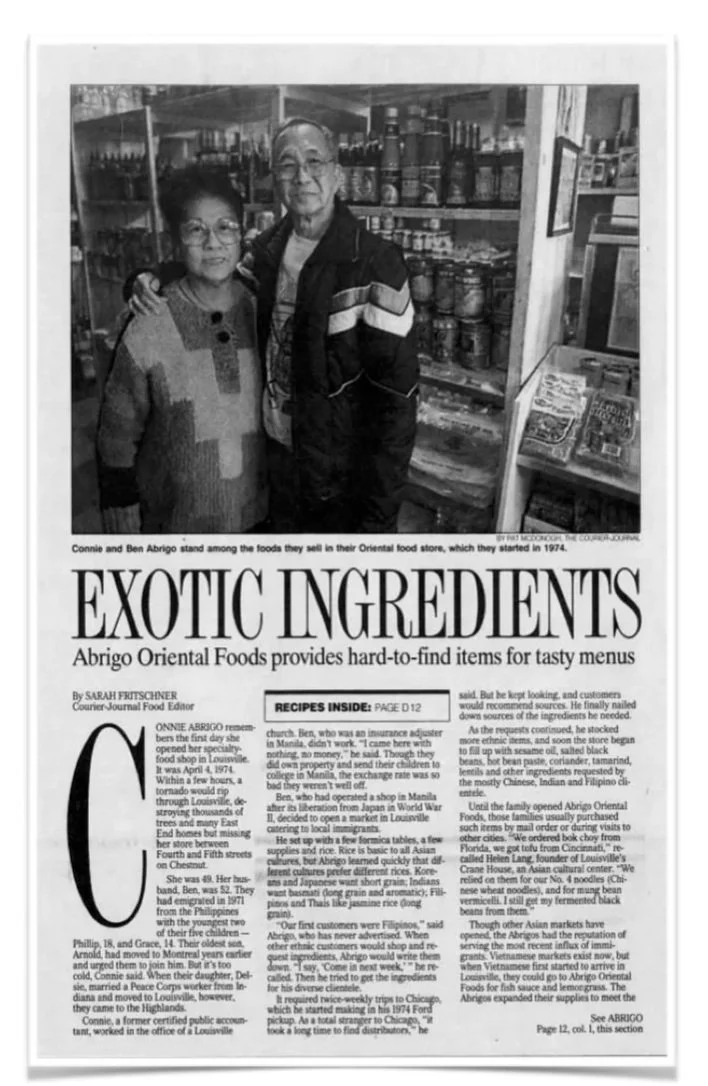
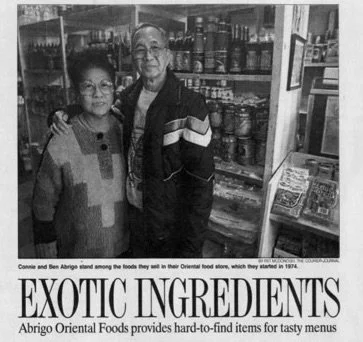
Filipino grocery stores like Abrigo Oriental Foods (photo above right) created strong community hubs during the Filipino boom Kentucky and Southern Indiana.
TODAY
Today, nearly 12,000 Filipinos call Louisville their home, and the community has extended their population to second and third-generation Filipino Americans. Filipino-owned businesses like Bamba Egg Roll, Ala Eh Eats, and My Tindahan are strong examples of cultural mainstays supported by local Filipinos and non-Filipinos alike.
Community groups like Crane House, Cultura Philippines, Filipino Catholic Community-Archdiocese of Louisville Filipino Ministry, and Louisville Office of Immigrant Affairs are mission-driven in keeping Filipino heritage alive and relevant in the city,
The success of various Filipino food festivals and public events provide insight on the density of the Filipino population and validates the city’s support and acceptance of Filipinos as a whole. As Louisville grows year by year, many in the community continue the endeavor to preserve their cultural heritage through engagement, exchange, and education.

Cultura Philippines waiting to perform at the annual Asian Night Market on Fourth Street Live! (2022).
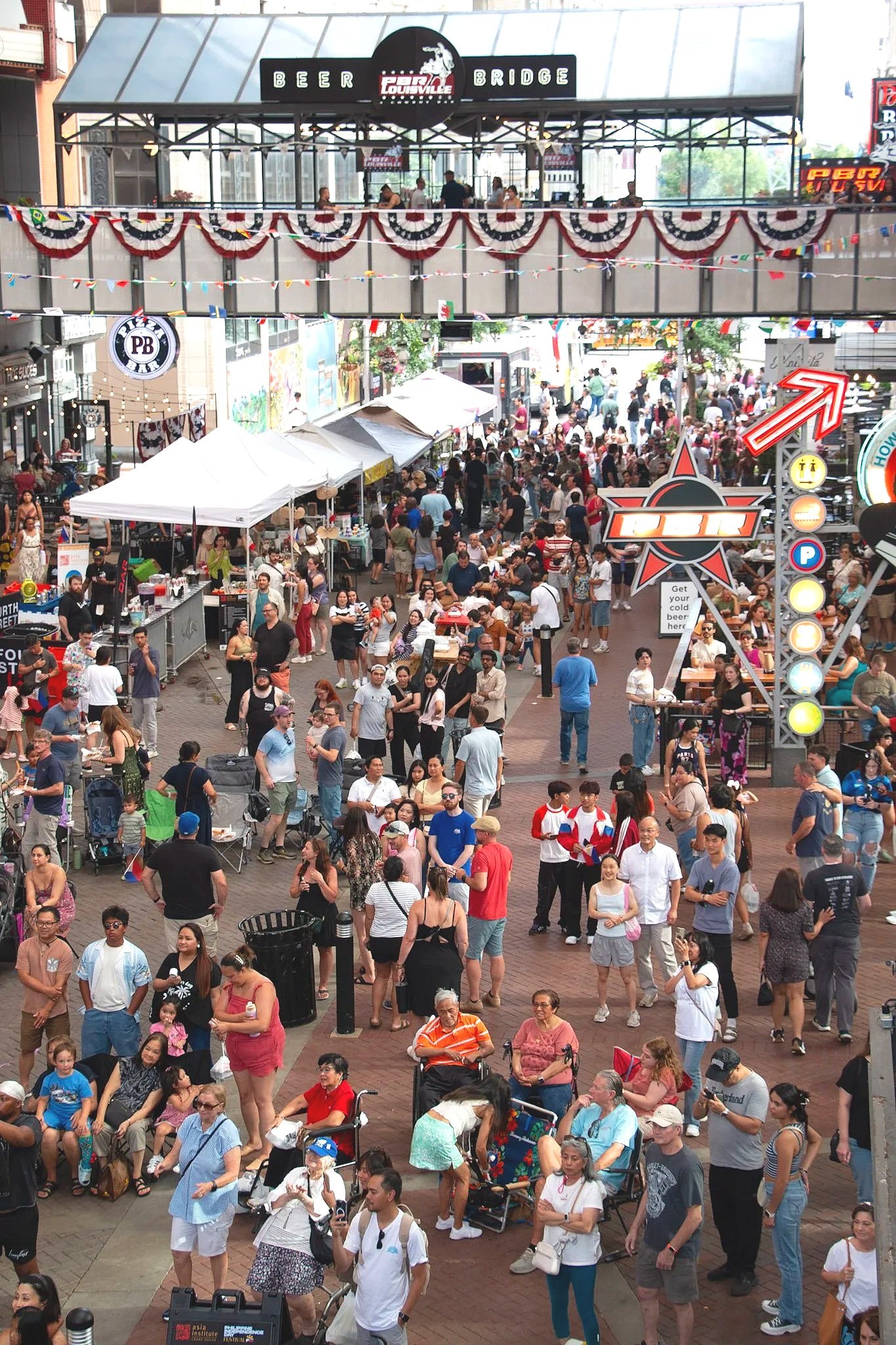
Attendees at the 2026 Philippine Independence Day Festival at Fourth Street Live!
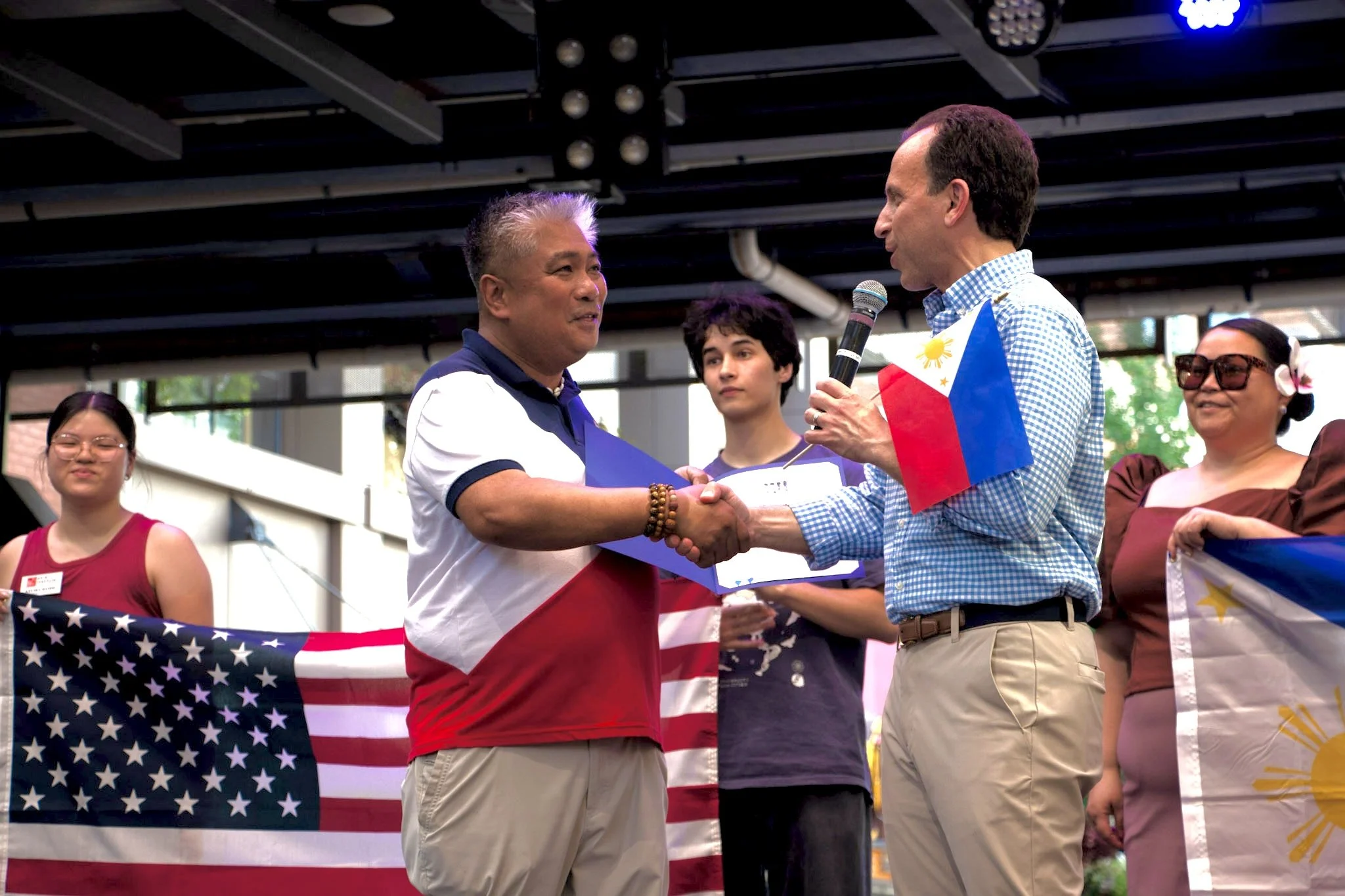
Mayor Craig Greenberg gives Executive Director of Crane House Joel Buno the proclamation that June 13 will officially be Philippine Independence Day in Louisville, KY. (2026)